
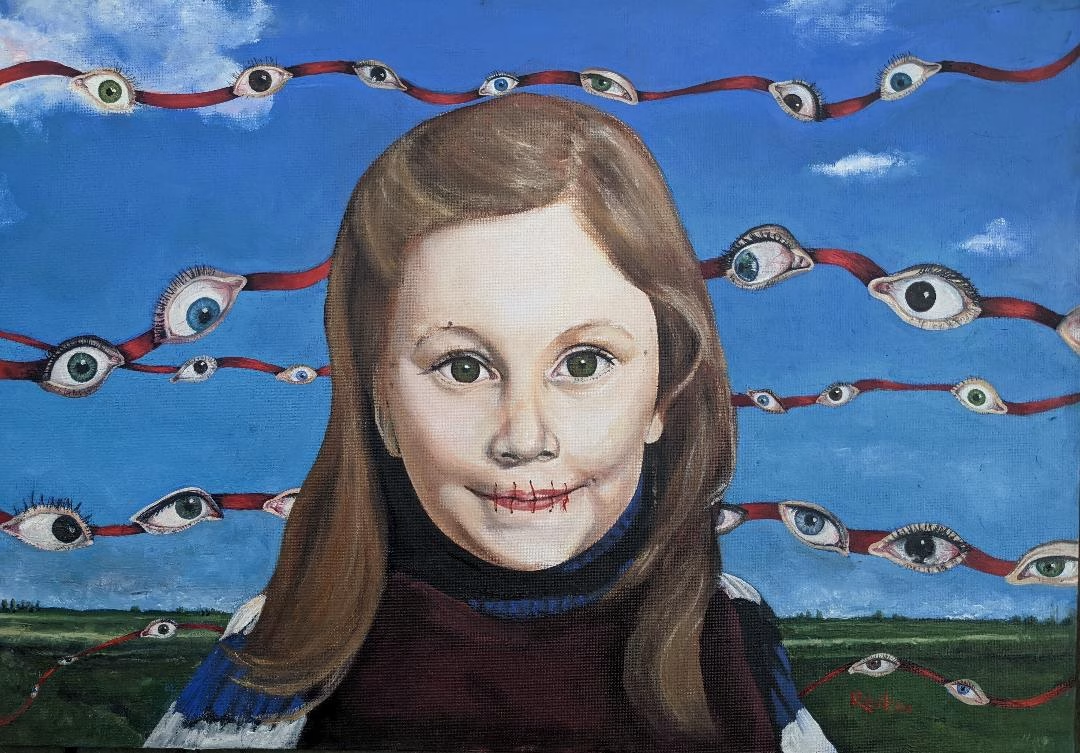
Art as a Language: Research, Recovery and Social Justice
The Power of Art in Healing
My artistic practice and research explore the relationship between trauma, creative expression, psychological recovery and social justice. Central to my work is the understanding that art can communicate experiences that are difficult, and sometimes impossible, to articulate through conventional language.
I am particularly interested in how visual expression can challenge established narratives surrounding domestic abuse, coercive control and trauma, and how artwork can become a form of testimony capable of influencing professional understanding and systemic change.
My research examines the potential for art to move beyond individual expression and therapeutic recovery to become a means of advocacy, recognition and social justice.

Scoping Review and Research Findings
In collaboration with Dr Kim Heyes of Manchester Metropolitan University, I undertook a scoping review examining existing research into art therapy interventions for women who have experienced domestic abuse.
The review examined twelve papers published between 2017 and 2024, investigating the experiences of women aged 16 and over who had participated in art therapy interventions.
Our findings highlighted the potential of art therapy to support emotional expression, self-esteem, trauma processing and interpersonal connection. However, the review also identified significant gaps in the existing literature, particularly concerning long-term outcomes and the relationship between therapeutic practice and social justice advocacy.
A central area of interest was the potential for visual storytelling to communicate experiences that may be difficult to articulate verbally, particularly where trauma, shame, fear or institutional responses have inhibited survivors’ ability to be heard.
The review has informed my subsequent research and practice, particularly my exploration of how art can function as a form of testimony and contribute to systemic change.
From Research to Practice: Becoming Arethusa CIC
I am the co-founder and Executive Director of Becoming Arethusa CIC, an organisation I established alongside integrative arts psychotherapist Biddy Daniel.
Becoming Arethusa brings together clinical art psychotherapy, lived experience, academic research and social justice advocacy to support women who have experienced domestic abuse and to challenge the systems responsible for their protection.
Our approach combines trauma-informed therapeutic programmes with opportunities for survivors to communicate their experiences through artwork, where they choose to do so. We recognise that recovery and advocacy are distinct processes, and that survivors must retain agency over their participation and how their creative work is shared.
Through partnerships with organisations across Devon and Cornwall, we have developed and delivered art psychotherapy programmes and collaborative projects that connect individual recovery with wider professional and institutional understanding.
Our work is informed by the Power Threat Meaning Framework and evaluated using measures including the Warwick–Edinburgh Mental Wellbeing Scale, alongside qualitative feedback and participant testimony.
In My Shoes: From Survival to Systemic Change

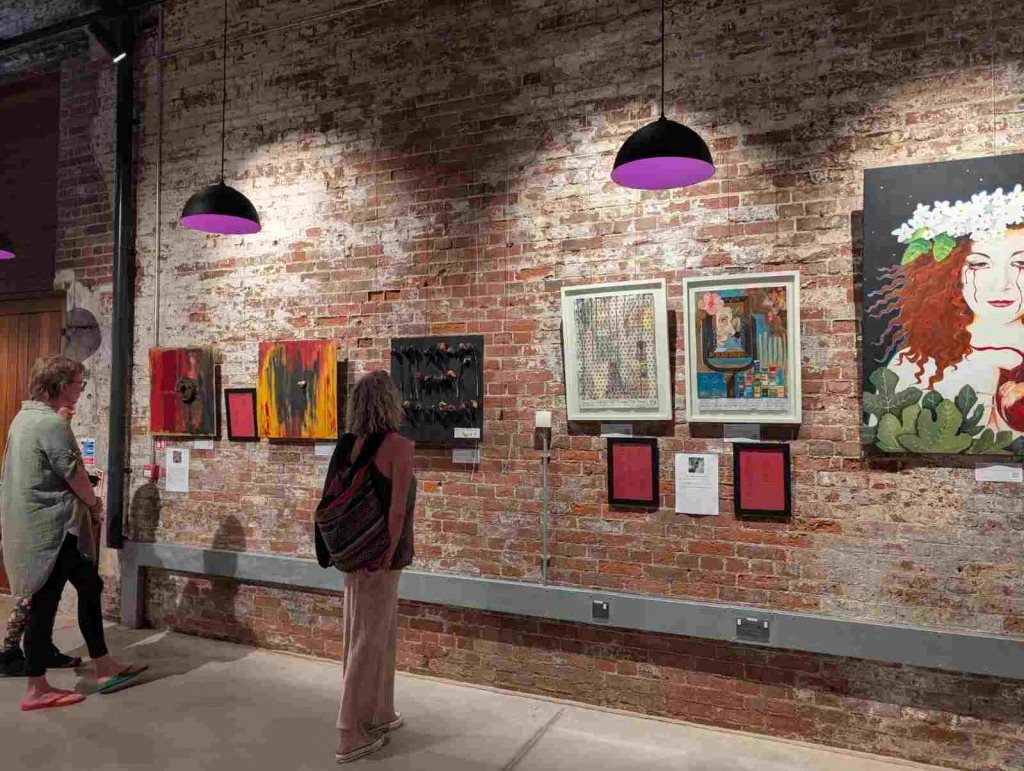


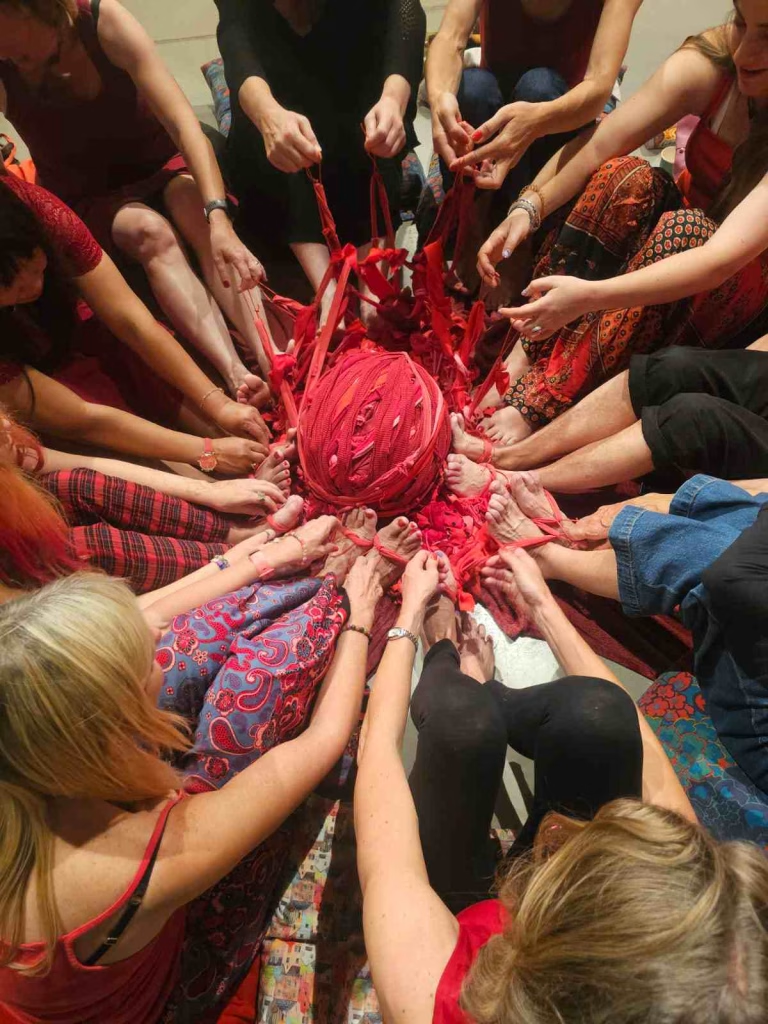
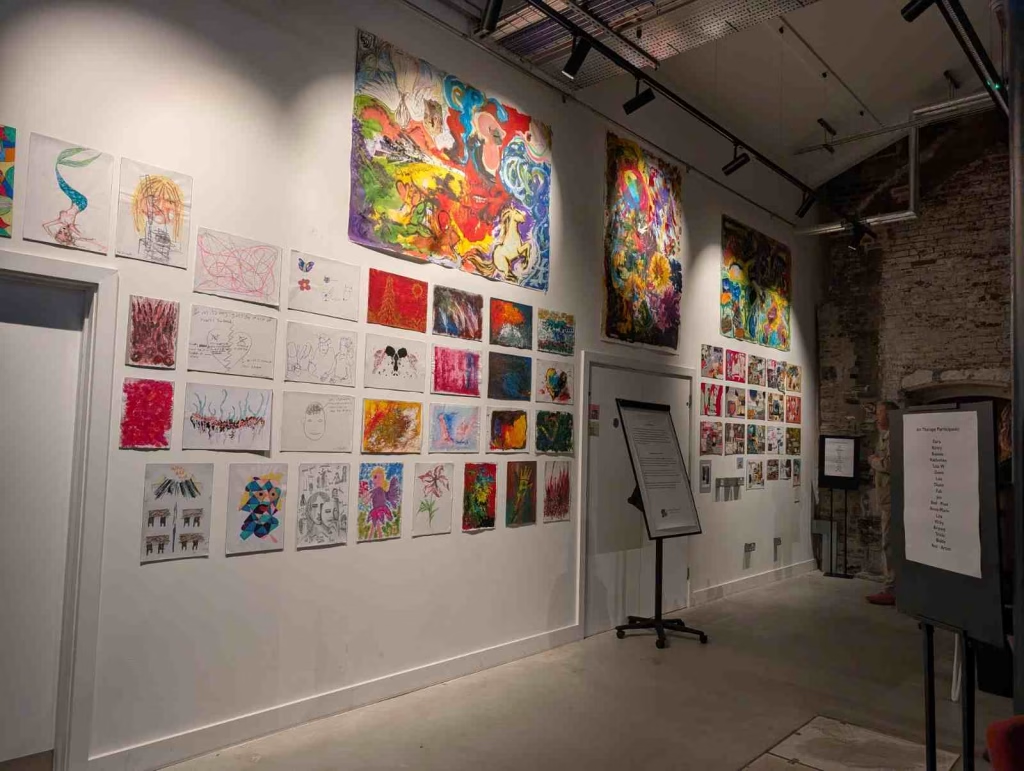
In June 2026, Becoming Arethusa presented In My Shoes, an exhibition at Market Hall, Devonport, Plymouth, bringing together artwork by domestic abuse survivors and professional artists.
The exhibition explored the psychological, emotional and social consequences of domestic abuse, presenting visual testimony that challenged conventional understandings of trauma and coercive control.
On 26 June 2026, we delivered the accompanying professional conference, From Survival to Systemic Change.
The event brought together approximately 175–200 delegates representing more than 125 organisations, including professionals from the judiciary, domestic abuse services, safeguarding, academia, healthcare and the voluntary sector.
Speakers included Dr Lucy Johnstone, Dr Kim Heyes, Professor Lara Feigel and representatives from the legal, safeguarding and domestic abuse sectors.
The conference created opportunities for survivor testimony to inform professional dialogue and generated practical outcomes, including connections between Barnardo’s and members of the magistracy concerning professional training.
For me, the exhibition and conference demonstrated how artistic practice can move beyond the gallery, bringing lived experience into spaces where professional decisions are made and institutional understanding can be challenged.
Collective Storytelling and Systemic Change
An important aspect of our ongoing research concerns collective storytelling and the potential for individual artistic testimony to reveal wider patterns of harm.
When experiences are brought together, they can expose recurring themes of coercive control, institutional misunderstanding, victim-blaming and the pathologisation of trauma.
We are interested in how collective visual narratives can challenge these responses, influence professional education and contribute to more informed and accountable systems.
Becoming Arethusa continues to explore how exhibitions, conferences, creative interventions and research partnerships can create meaningful dialogue between survivors and professionals.
TEDx: Standing in Their Shoes: How Survival Art Becomes Systemic Change
In March 2026, I delivered a talk at TEDxPorthtowanWomen, exploring how art created through experiences of trauma can become a powerful form of communication and advocacy.
Drawing upon my own artistic practice, lived experience and research, I examined the potential for visual imagery to communicate complex psychological experiences and challenge the assumptions through which survivors are often judged.
My central proposition was simple:
Art is a language.
A language capable of communicating experiences beyond words, encouraging recognition and creating opportunities for empathy and understanding.
The talk brought together the personal, artistic and political dimensions of my practice, questioning how visual testimony might contribute to changes in the systems intended to protect survivors.
Continuing Artistic Research
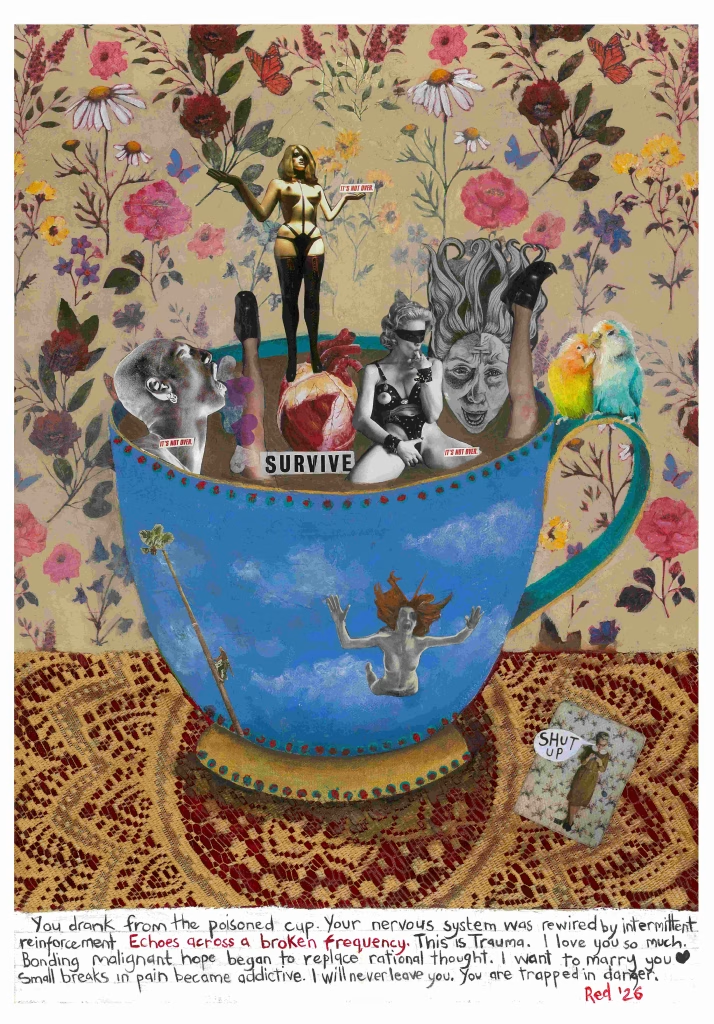
My research is inseparable from my wider artistic practice, which has long explored psychological control, identity, trauma, surrealism and the relationship between conscious and unconscious expression.
Alongside my work in social justice, I am developing a practice-based doctoral enquiry through Red and Betty Said, investigating involuntary speech, agency, authorship and the relationship between neurological experience and artistic expression.
Although distinct from my research into domestic abuse, both areas share a fundamental concern: how experiences that resist conventional language can be communicated, interpreted and understood through art.
I am interested in the boundaries between intention and expression, the relationship between lived experience and institutional interpretation, and the capacity of artistic practice to generate knowledge that cannot be reached through language alone.
My continuing work brings together artistic experimentation, research and critical enquiry, exploring how art can challenge established understandings of identity, agency and human experience.
I believe art is more than a means of representation. It is a language through which experiences can be communicated, witnessed and understood — and through which established ways of thinking can be challenged.
